
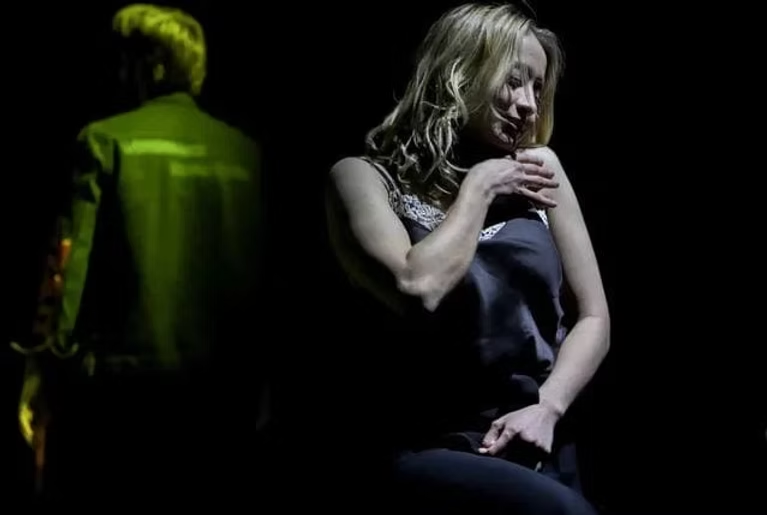
Images throughout this blog are from Victoria Klipova’s play “On Thin Ice”
On Thin Ice is a bold, intimate theatre piece born from personal experience and honed for audiences in Russia. Written and directed by Victoria Klipova, the play follows four characters whose lives are fractured by different forms of addiction. Using a split-stage form — one side realistic, the other phantasmagoric — Victoria blends movement, colour, sound and theatrical metaphor to make the inner logic of addiction visible and felt. In this interview Victoria talks about the play’s origins, the creative choices behind its two-layered staging, audience responses, and her hopes to bring the work to the UK.
Leon Clowes: Victoria, thanks for agreeing to this interview. You created a play called On Thin Ice in Russia. Could you give us some background on where it was performed and what it’s about?
Victoria Klipova: Thank you, Leon. I’m Victoria — a theatre and film director — and I wrote and staged On Thin Ice in Russia. The project received a lot of attention there: audiences responded strongly, and we received support from a foundation that sponsored the production. That support helped the play find success in Russia.
I’m here because I think the themes are crucial for the UK as well. Addiction is a topic we need to keep talking about. Talking brings attention, and attention helps people notice and respond.
Leon: What was the spark for the play? What inspired you to make On Thin Ice about addiction, and what do you mean by the “collision of two realities” in the show?
Victoria: Frankly, I wrote the play from my own experience. I was addicted. I gave up drugs and alcohol, and I wrote a long text about how addiction tried to ruin my life, how I struggled with death and the feeling it brought. That text became the backbone of the play, and I didn’t change it much.
I was surrounded by people who were addicted: some died, some are in recovery, some have been sober for many years. The play grew out of conversations with those people. I wanted to say something to them. I wanted to reach them even though ultimately everyone must choose to change for themselves. After the premiere, people came to me in tears saying, “Everything is true. That’s my situation.” Some wanted to use the play in their own community theatre. Those responses showed me how many people are in the same boat and how important recovery art can be.
Leon: You’ve said the play has four characters representing four different addictions, and that the stage is split into a realistic canvas and a phantasmagoric canvas. Can you give us more detail about what happens on stage and why you split it this way? Did you workshop with actors to find this form?

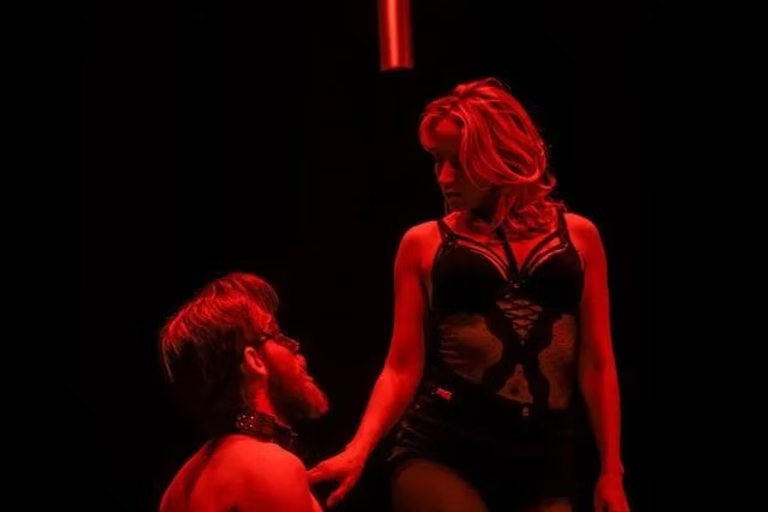
Victoria: Yes, the play has two parallel actions. One is the realistic world: four characters, each with their own story. For example, Nikita, the drug user, grew into addiction partly due to an over-controlling mother; he’s trying to escape to another world. There’s Ellis, a lonely alcoholic who teaches Japanese and is introverted; and Nicole, who seeks love through sex and flirting.
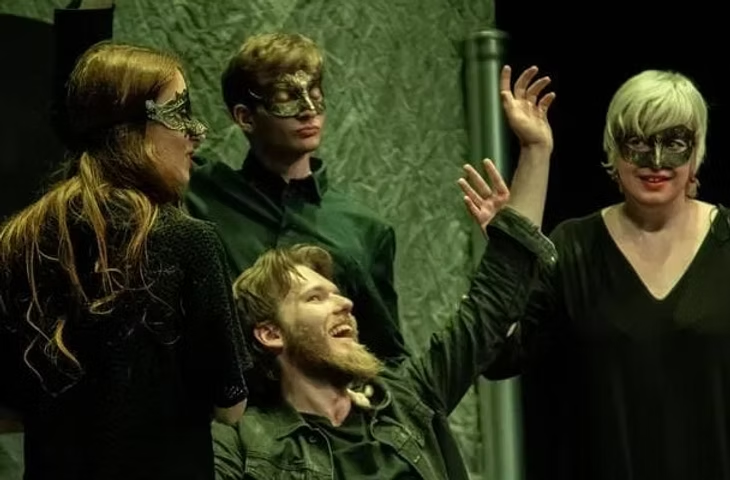
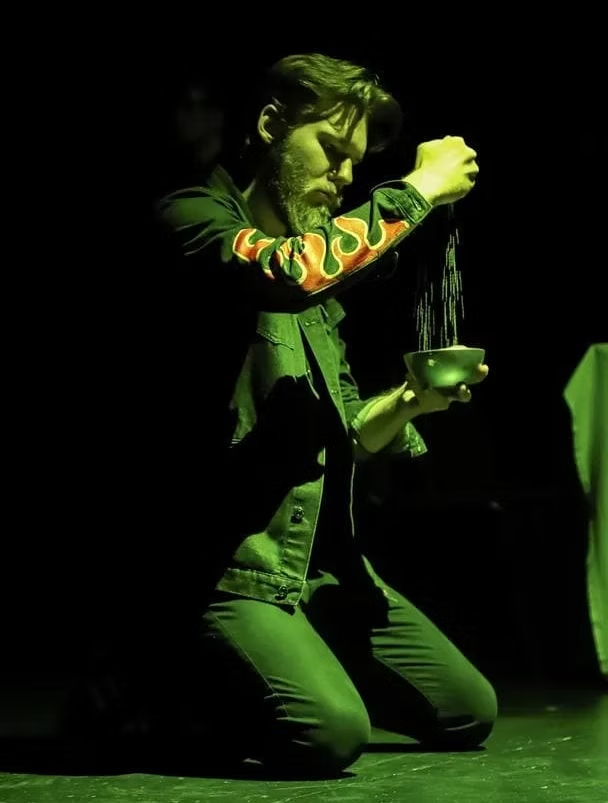
The second layer is the phantasmagoric world: each character’s addiction has its own color and metaphorical expression. When a character reaches a moment of surrender to addiction, the lighting changes to that personal colour. For Ellis, the light might shift to green, and we move into the phantasmagoria. For Ellis we might see her dancing with a glass of wine, negotiating with herself: will she keep drinking? Movement, masks, costume and ensemble hands attach or pull at characters to show how they’re consumed by the addiction. When colours mix on a body it can make it appear “dirty,” which shows the seductive and destructive side of addiction at the same time.
The two canvasses — the realistic and the metaphorical — let us show both how addiction looks from the outside and how it feels from the inside. For people who aren’t addicted, the phantasmagoria can help them understand a mindset that’s otherwise intangible. For people affected by a loved one’s addiction, it can offer new perspective and sometimes push someone toward seeking change. We developed this through rehearsals with actors, exploring movement, lighting and sound to make the shifts feel visceral.
Leon: That use of theatrical technique sounds very powerful. Which characters or moments do audiences most commonly respond to, or sometimes misunderstand?
Victoria: There are a few moments that always touch people. The actress who plays Ellis dancing with the glass often finishes to strong applause. It’s a moment audiences find very moving. Originally, I was going to cut that moment! I am glad I did not.
Another frequent response comes from the character of the gambler, a chef in the story. After performances, some chefs in the audience told me they felt it was exactly their life due to the pressure and lack of recognition at work. That confirmed how authentic the scenes feel.
One of the most difficult characters for audiences to grasp is Nicole, the woman with compulsive sexual behaviour. Sexual addiction is less visible as a cultural category because sex is a normal human need; the difference is when behaviour becomes destructive and causes real problems in life. Some viewers initially don’t see that distinction. In early drafts we experimented with harsher, more surreal choices. For instance, a sequence suggesting the character “loses” her body to others. However, some audience members read those moments as grotesque or misinterpreted the metaphor. We refined it so the psychological disassociation is clearer: addiction can make parts of yourself feel separated or objectified.

Leon: That sense of dissociation comes through, then. To finish up: what next for On Thin Ice? Do you want to bring it to the UK?
Victoria: Yes, I’m very interested in bringing the play to the UK. Meeting you has been inspiring because Performing Recovery is a strong community with reach and understanding of recovery-related arts. I’m still learning about British audiences: who they are, what they respond to, and which topics resonate here. But I believe there’s a demand — and I want to give the play new life in the UK.

Leon: We do have a vibrant practice of addiction and recovery-related art in the UK, even if resources are hard for artists. I’d encourage you to look at support routes like Arts Council England and connect with recovery arts networks. One final question — what haven’t we covered that you think is central to On Thin Ice?
Victoria: I’d emphasize that the play is not simply an aesthetic depiction of addiction. It’s a staged conversation about motivation, hope and the possibility of change. I don’t want to glamorize drinking or drug use. The play wants to show that even in a very dark moment such as when you feel hopeless or feel like dying, there can be a light, a conversation or a small event that shifts someone toward life.
The characters are drawn from people close to me and from myself, so they’re real. My intention is to ask questions through the theatre that push the audience to answer honestly. I want the piece to touch the heart and create a response, whether this be in agreement, anger, or recognition, because a real reaction opens the door for change. Theatre can spark conversations, build communities and give people the impulse to seek a different life.

Leon Clowes: Thank you, Victoria, it’s been a pleasure talking with you. I look forward to seeing On Thin Ice in the UK.
Victoria Klipova: Thank you very much.
Follow Victoria Kilpova on Instagram: @vc_director
See the YouTube trailer for On Thin Ice: https://www.youtube.com/watch?v=Z-nmZFcuaKo


